
Top
 

Materials

Materials You Know and Trust

Material choice affects how a product performs, how long it lasts, and how well it holds up in the environment it was built for.

The right combination of fabric, film, foam, or plastic can improve durability, flexibility, comfort, cleanability, structure, and overall function. It also plays a major role in how a product is manufactured, whether that means sewn construction, RF welding, ultrasonic welding, or another specialty process.

For that reason, material selection should never be an afterthought. It should support both the application and the production method from the start.

Materials We Commonly Work With

Nylons and Woven Fabrics

  • 1680D ballistic nylon
  • 400D nylon packcloth
  • 210D ripstop nylon
  • urethane coated nylon
  • TPU coated nylon
  • taffeta nylon
  • twill
  • Sunbrella

Vinyl, Film, and Coated Materials

  • vinyl
  • clear vinyl
  • matte clear TPU
  • urethane TPU film
  • frosted polyether film
  • 600 x 300 PVC Coated Polyester

Foam, Mesh, and Laminated Materials

  • foam brushed tricot
  • foam laminated unbroken loop
  • open-cell foam
  • closed-cell foam
  • spacer mesh
  • nylon mesh
  • neoprene

Stretch, Loop, and Specialty Textiles

  • unbroken loop (UBL)
  • spandex
  • knit jersey
  • polyester nonwoven
  • Tyvek

Plastics and Structural Materials

  • polyethylene
  • HDPE plastic
201202_TPI2834 (1)

Materials Matched to the Process

Not every material works the same way in production. Some are better suited for sewing. Others are better for sealed construction or specialty fabrication.

Material selection often depends on the balance of performance needs and manufacturing requirements, including:

  • abrasion resistance
  • flexibility and comfort
  • moisture resistance
  • wipe-clean surfaces
  • visibility through clear materials
  • cushioning and impact protection
  • lightweight structure
  • compatibility with sewn or welded construction

Built Around the Application

Every application has different demands. Some products need rugged outer materials and reinforced structure. Others need soft-touch surfaces, breathable mesh, flexible films, or cleanable finishes.

Choosing the right material early helps avoid problems later in development and production. It also helps ensure the finished product performs the way it is supposed to in the field.

Our Process

Let’s Talk About Your Application

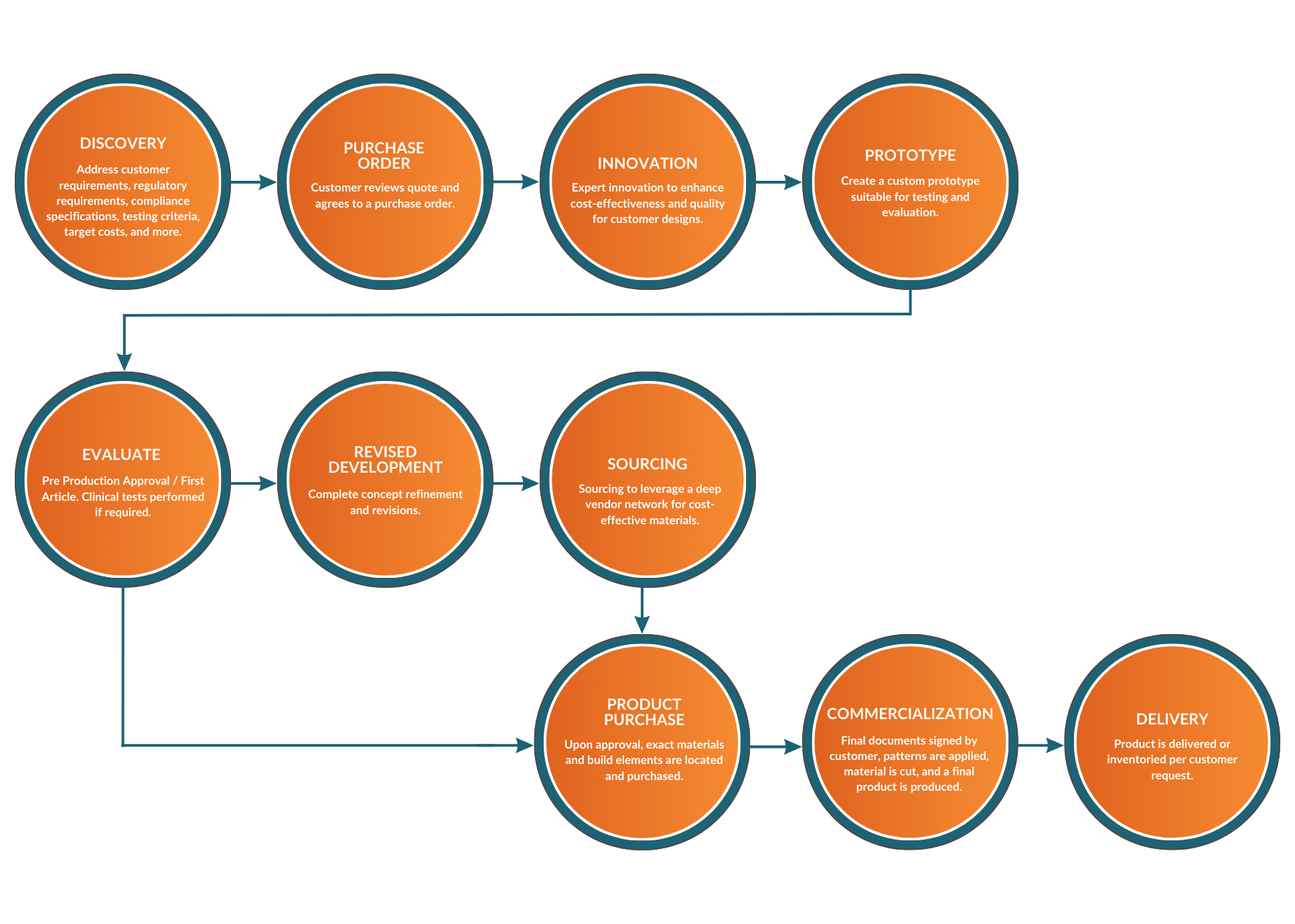
Need help choosing the right material for a custom product? TPI Custom Solutions can help evaluate options, source materials, and match the right material to the right manufacturing process.